Showing posts with label communication. Show all posts

Tuesday, September 1, 2026

Calm First, Perform Better: Navigating Difficult Conversations Without Losing Your Center

By Mary-Anne Schelb
Bringing Calm to the Chaos

Difficult conversations rarely begin with the words, “This is going to be difficult.”

Sometimes they begin with an email that feels sharper than expected. A question in a meeting that catches you off guard. A client who is frustrated. A coworker who misunderstood your intention. A supervisor asking for clarification when you already feel stretched.

And sometimes, they begin with a phone call.

You see the name come across the screen, or you pick up expecting a simple conversation, and within moments, the tone changes. Someone is upset. Someone needs an answer. Someone is questioning a decision, pushing for a response, or bringing tension into a conversation you were not prepared to have.

In an instant, your body reacts before your mind has had a chance to catch up.

Your shoulders tighten.
Your breathing changes.
Your thoughts start moving quickly.

What did they mean by that?
Why are they saying it that way?
Do they think I did something wrong?
How do I defend myself without making this worse?

In moments like this, many professionals do one of two things.

They either react too quickly, or they shut down.

Neither usually leads to the conversation they actually want to have.

The Moment Before the Response Matters

One of the most powerful parts of a difficult conversation is the moment before you respond.

It is also one of the easiest moments to miss.

When we feel challenged, misunderstood, criticized, questioned, or pressured, our natural instinct is often to protect ourselves. We may explain too much, interrupt, become defensive, or start preparing our response before the other person has even finished speaking.

That is not because we are unprofessional.

It is because we are human.

But in a professional setting, the ability to pause before responding can change the entire direction of a conversation.

A pause gives you just enough room to come back to center.

It helps you listen for what is actually being said instead of only reacting to how it feels.

It allows you to respond from intention rather than emotion.

Calm Does Not Mean You Agree

Sometimes people hear the word calm and think it means being passive, agreeable, or silent.

That is not what I mean.

Calm does not mean you let people speak to you disrespectfully.  It does not mean you avoid hard conversations.  It does not mean you say yes when you need to say no.

Calm means you stay connected to yourself while you are inside the conversation.

You can be calm and clear.
You can be calm and direct.
You can be calm and firm.
You can be calm and still disagree.

In fact, calm often helps us communicate more effectively because we are no longer trying to manage the entire conversation from a place of internal chaos.

The Pause, Clarify, Respond Tool

Before you answer in a difficult conversation, try this simple three-step tool:

Pause. Clarify. Respond.

First, pause.

Take one slow breath before you speak. If you are in person, let your feet feel the floor. If you are on Zoom, sit back slightly in your chair. If you are responding to an email, take your hands off the keyboard for a moment.

And if you are on the phone, give yourself permission to pause there too.  

You do not have to fill every second of silence.
You can take a breath before answering.
You can say, “Let me think about that for a moment.”

That small pause is not a delay.

It is a reset.

Second, clarify.

Before defending, explaining, or correcting, make sure you understand what is actually being said.

You might use a phrase like:

“Let me make sure I’m understanding this clearly.”

Or:

“What I’m hearing is…”

Or:

“Can you clarify what you need from me right now?”

Clarifying slows the conversation down and often reduces unnecessary tension.

Many difficult conversations become harder simply because both people are reacting to assumptions instead of responding to facts.

Third, respond.

Once you have paused and clarified, then choose your response.

Not the reaction that wants to jump out first.
Not the over-explanation that comes from feeling uncomfortable.
Not the defensive answer that tries to protect your pride.

Choose the response that supports the outcome you actually want.

That might sound like:

“I can understand why that would be frustrating.”
“Here is what I can do next.”
“I see this differently, and I’d like to explain why.”
“I want to respond thoughtfully, so I’d like to take a little time and come back to you.”

That is professional strength.

Not avoidance.  Not aggression.

Strength.

Staying Centered Changes the Conversation

When we stay centered, we give ourselves a better chance to hear clearly, speak clearly, and move the conversation forward.

We may not control how the other person responds.
We may not resolve everything in one conversation.
We may not leave with everyone agreeing.

But we can leave knowing we showed up with steadiness, professionalism, and intention.

And that matters.

Because difficult conversations are not just about what is said.

They are about how we show up while saying it.

Calm First. Then Communicate Better.

Professional success often depends on our ability to communicate under pressure.

Not just when the conversation is easy.
Not just when everyone agrees.
Not just when we feel prepared.

But when the moment is tense, unexpected, emotional, or uncomfortable.

That is where calm becomes a tool.

Before you respond, pause.
Before you assume, clarify.
Before you react, choose.

Because when you calm the chaos inside, you create more room for clarity, respect, and better communication.

Calm first.

Then communicate better.

Then perform better.


About the Author

Mary-Anne Schelb is a Life Coach, Holistic Lifestyle Consultant, Holistic Health Practitioner, and founder of Intentional Calm. Through her work, Mary-Anne helps busy professionals calm the chaos, reduce stress, and move forward with more clarity, steadiness, and intention.

She is the creator of the Intentional Calm Method™, a practical framework that blends holistic wellness, nervous-system support, mindfulness, energy work, journaling, and intentional living tools to help people return to center and make clearer, more grounded decisions. She is also the author of the book, Calming the Chaos: The Intentional Calm Method™.

In addition to her holistic wellness practice, Mary-Anne is an educator, speaker, and workshop facilitator. Her signature message is simple: calm is not a luxury — it is a lifeline.

Learn more at IntentionalCalm.com 

Monday, September 28, 2015

I Can't Believe I Stepped Into A Gossip Grapevine Again!


Spend any time with a group of people and you’re going to hear gossip. In fact, there’s so much gossip flying around that most people just accept it as a part of life. The TV characters we love provide us with step-by-step guidelines on how to gossip. Newsstands are full of evidence that nothing is off limits when it comes to gossip. And even though we instinctively know that gossiping is not a good thing, it’s easy to get caught up in the excitement and entertainment of a good piece of juicy gossip.
One reason this happens is because there’s a fine line between discussing the facts of a situation and speculating about all the grey areas surrounding it. And anyone who works more than a couple of hours a day knows that people in the workplace talk about a lot more than business. Not getting caught up in the gossip going around the office can be a challenge. In some work environments, it probably feels safer to stay in the gossip loop than to risk stepping away from it and becoming someone who’s gossiped about.
Sadly, we don’t have the power to stop our co-workers from gossiping. Fortunately, we have absolute control over whether we do or don’t participate and/or contribute to the gossip grapevine. Here are a few strategies to help you steer clear of a gossip grapevine.
1. Own 100% of what you say. This can be trickier than it sounds because sometimes we have information that other people aren’t privy to, and the thought of showing our co-workers that we’re “in the know” can be very compelling. Before you share, simply ask yourself who benefits from adding you’re inside information to the conversation. If it’s you, your status, or your ego, then don’t share.
2. When you’re tempted to contribute to a conversation, consider these questions too:
·       Will the information I have contribute something positive and/or worthwhile to the conversation?
·       Is the information I have public knowledge or the result of a shared confidence?
·       Could I just as easily talk to the person or people the information I have is about without a second thought?
3. When you realize you’ve stepped into a gossip grapevine, step out of it. Just because you’re around gossip, doesn’t mean you have to stick around. Work projects, problems, issues, and deadlines are all legitimate excuses for walking away from the gossip zone without stepping on anyone’s gossip-prone toes.
4. Remember that gossip isn’t limited to secretive conversations around the proverbial water cooler. Take care with your comments in voicemails, emails, and other Internet platforms. You don’t want your words to be misinterpreted as gossip by the recipient simply because they couldn’t see your facial expressions, or body language, or hear your tone of voice.

Gossip in the workplace can become a serious problem. It can ruin reputations and careers in a manner of minutes. But it’s also one of those situations where you get to choose between being part of the problem or part of the solution. Now that you’re “in the know”, where will you stand? Will I hear it through the grapevine?

Alan Luoma is a Sales Coach with extensive experience in industrial sales, sales management, new product development, sales and product training. He works part time with a national sustainable packaging company with their distributors to increase sales. Alan is an expert that speaks on eliminating behaviors that prevent you from being successful in sales and uncovering sales prevention departments that hinder your success. He is a member of the Hartford Springfield Speakers Network, The National Speakers Association and New England Speakers Association. You can view his profile on LinkedIn, or contact him at Luoma@snet.net

Wednesday, July 15, 2015

6 Common Communication Mistakes You May Be Making


Miscommunication can make or break our world.  Bad communication leads to broken relationships:  with the people you work with, your clients or customers, your family, your at-large community.


6 Common Communication Mistakes that you might be making:

1.  Not using "we" language.
Newsflash.  Relationships are not a competition.  Or at least they shouldn't be.  When you start to think in terms of "me" and "you", it's time to reframe the conversation and think of yourselves as a team.  Work to solve a problem, not to be victorious.

2. Not giving eye contact.
When people are not looking at us when we talk, how does that make you feel?  Not good, right?  So try living by the golden rule and give other people the same courtesy that you want to be given.

3. Interrupting.
What does it say to someone when you interrupt them?  It says, "What I have to say is more important than what you have to say."  This can be a result of excitement or a desire for power.  Either way, it still says.  "I'm more important than you."

4. Making assumptions before you hear the whole message.
You have probably had the thought, "Oh I don't even have to hear the rest of this - I already know what they're going to say!" Well, maybe you do .... maybe you don't.  Don't do that.  We don't like when people make assumptions about what we are saying, do don't do that to other people either.

5. Not asking probing questions of other people.
Saying things like, "Tell me more about that" or "So how did that make you feel?" lets the other person know that you care about them enough to ask for more information.  That's called a probing question. Ask people to elaborate.  It makes them feel good and shows that you're interested.

6. Needing to "win" an argument.
I repeat.....Relationships are not a competition.  Admitting that you're wrong is not a sign of weakness.  It is a sign of maturity.  No one is right all of the time.  Don't think you have to "win."  Acknowledging your mistakes will not give away your power.  It shows that you are the better person because you can be honest.

Being a good communicator takes effort.  It's like being a good athlete - you have to practice if you want to be good at your craft!

Are the communicator you need to be?


Ann Meacham is president of Leadership Dynamics.  She works with business leaders to help them see issues that need to be addressed and ensure that the focus is on the big picture.

Sign up for a Free Leadership Strategy Session on her website.  Email a comment to ann@leadyourteams.com  

Wednesday, April 1, 2015

Are You Asking the Right Quesitons?

by Ann Meacham
When you are challenged to relate positively with someone at work or at home, there is resistance, or actual conflict, have you asked yourself how you might improve the situation?  Often solutions elude us because we are asking ourselves the wrong questions.
In her book, “change your questions, change your life,” Marilee Adams shared what she calls “Judger” questions.  These questions cause us to come across as argumentative, arrogant and know-it-all.  When you judge, you make it almost impossible for anyone else to make a suggestion or contribution.

Judger Questions:

What’s wrong?
Who’s to blame?
How can I prove I’m right?
Why can’t I be successful?
How could I lose?
How can I be in control?
Why are they so clueless and frustrating?
Why bother?

Notice how you feel when you are having these thoughts (and we all do at times.)  If we’re in the Judger Pit we can feel stuck, overwhelmed, negative, depressed. 

A more productive way of thinking can be inspiring, stimulate curiosity, and create the relationships that will help us succeed.  Consider these:

Learner Questions:
What am I responsible for?
What are the facts?
What outcome do I want?
What are my choices?
What’s useful about this?
What can I learn?
What is the other person feeling, needing, and wanting?
What’s possible?

The natural or normal working of our mind leaves us at the mercy of other people’s opinions, the whims of our own moods, and the negative influences of our upbringing.  When you pause to ask yourself questions, it gives you time to think about the best response or action.

If you want to be successful in your relationships, you must face facts about your role or influence. 

The most effective communication is about 20% telling and 80% asking.  You’d be amazed how many things would improve just by paying attention to that one principle.

The Judger tends to create Win-Lose scenarios.  The Learner creates a Win-Win.  Are you a Judger or a Learner?  How can you tell?


Ann Meacham, president of Leadership Dynamics works with business owners and executives to clear their blind spots so they will know how to succeed in their business. Call her: 860-788-3504  ann@leadyourteams.com  Sign up for a Free Leadership Strategy Session.

Saturday, January 24, 2015

A Powerful Communication Tool To Increase Your Business!


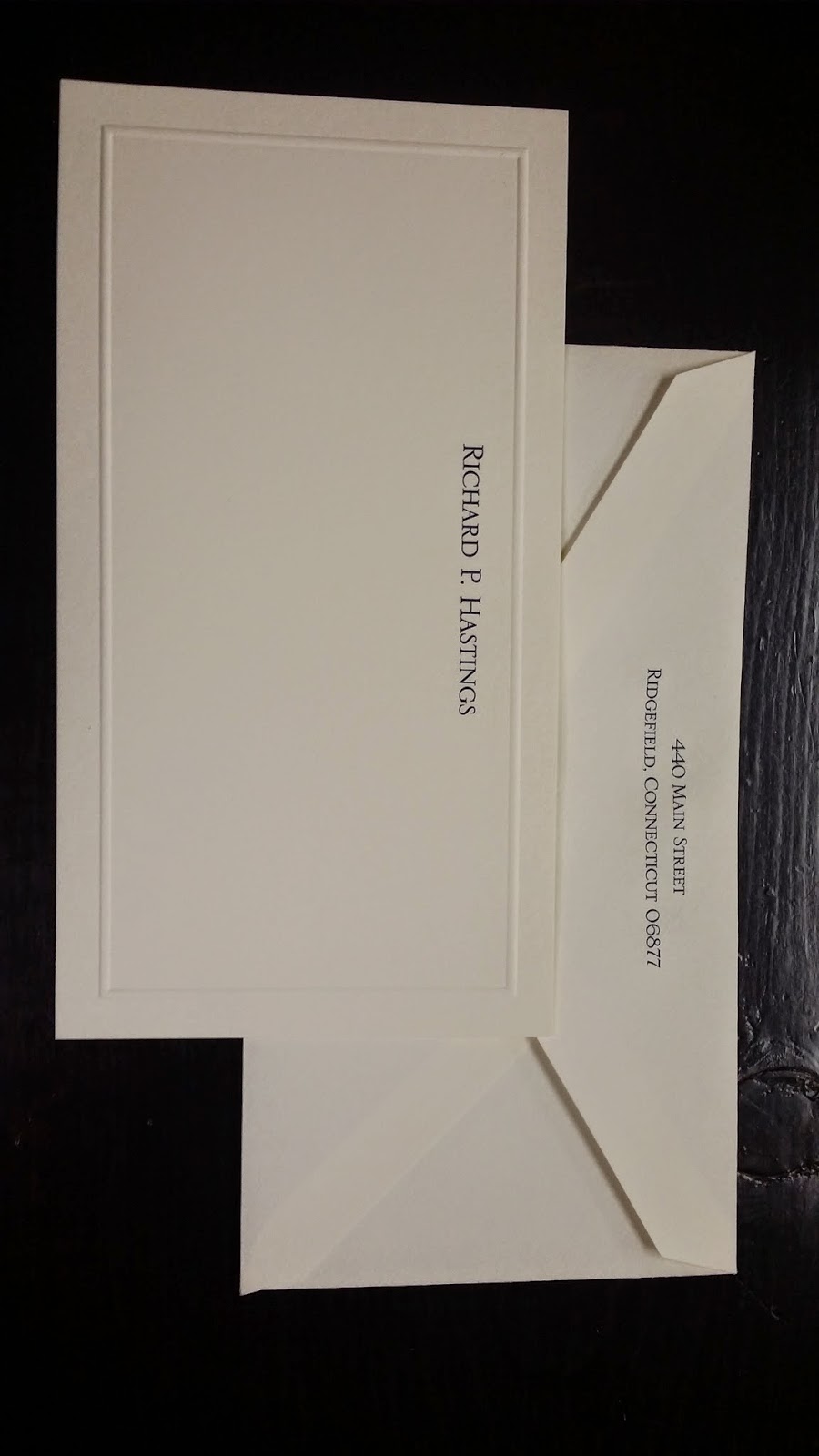
Every day we are inundated with messages.  How can you set yourself apart from everyone else in communicating with your client or customer? How can you send a powerful message that distinguishes you from all others and that will be thought about long after it is read? A handwritten note is a simple yet powerful tool that sets you apart as a professional with an appreciation for the importance of this old school method of communication. It also provides the reader with a sense of appreciation and gratitude and best of all is a fast, easy and effective way to communicate with those around us.


I have used this method of communication in my law practice and find it to be highly effective. There are a certain number of things that you can do to heighten this experience for the reader of your handwritten note that are worthy of mention, that include at least the following:


  • Purchase engraved stationery-you may be amazed to find out how relatively inexpensive engraved stationery is that includes your name, initials, business name and/or company logo. The additional cost of making this very bold statement is well worth the added expense and is certain to make a dramatic impact upon the recipient;


  • Come up with a sincere reason to send the card as there are many opportunities to send a preprinted card to an individual. A thank you for some gift, special service, a business lunch or dinner, or an acknowledgment of some type of act or deed. You could also forward some article that you have read about the individual, their company or family with a brief note acknowledging the article and congratulating the individual about the contents of the story;


  • Make the message personal and not commercial.  Do not send a handwritten card or note in an effort to acquire business from the recipient. This is not the reason for sending a handwritten note and it detracts from the message. Do not talk about your business, include your business cards, or make it seem like you are attempting to send this note for reasons other than personal knowledge meant and appreciation; and


  • Keep stamps in your office-it is always much better to place a stamp on the outside of the envelope rather than a metered one. You should hand write out the recipient's name and address on the outside of the envelope as it makes it personal.


In writing a personal note to a friend, business associates or client start by using a greeting along with the person's name. You should thank the individual for the deed, gift or gesture that you are acknowledging and indicate how this has made a positive impact upon you. You could also include an article or story that you have enclosed and indicate how you were happy to read about that individual's news worthy information. You should include some call to action at the end of your note such as meeting for coffee, lunch, a drink or some other activity and later follow-up with the individual about scheduling something. You should end the note with some familiar salutation and then sign your name. A "P.S." at the end of the note is a very powerful way to leave a message that the recipient will read before looking at the text of your note.


If you start to use this powerful technique on a regular basis you will find that you will be receiving calls from the recipients of these notes who will be quite appreciative of the fact that you took time out of your busy schedule to actually write out a note. It is important to mention that although penmanship is not a great consideration it is important that your handwriting be legible. If you employ this little used technique, which brings people back to days gone by, you will become memorable and will stand out from those around you.


Try it, you will be surprised by the responses that you receive!